
My Type, Apparently

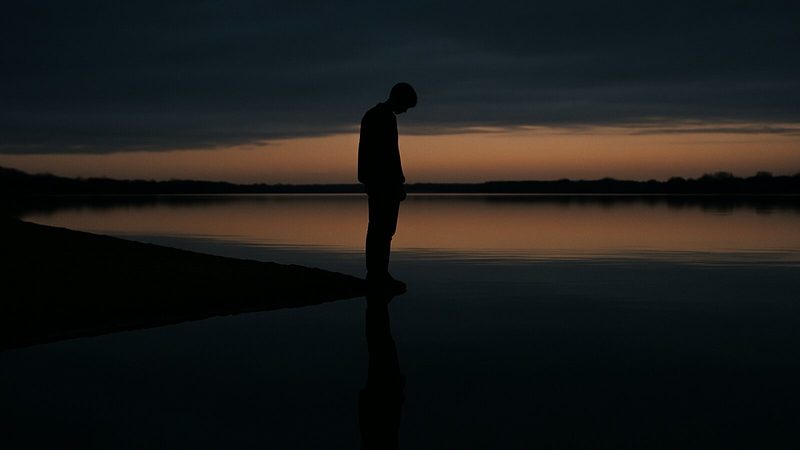
You need a little context to understand why this meme matters.
There’s a meme format that ends with “It’s good to evolve.” Five panels, cinematic lighting, a silhouette in each one. The original goes from some self-deprecating starting point to a better version of the person. Very inspirational. Very shareable.
I was sitting on a shore excursion bus in Japan when my ex-husband appeared in my “people you may know” on Instagram. I scrolled his profile. His bio had evolved. His positioning had evolved. His whole self-presentation had evolved, specifically in the direction of looking like he had always been the person I spent four years trying to help him become.
Panel 1 and panel 5 are the same person. That’s the joke. Or the point. Probably both.
The “imbecile” line in panel 4 is a direct quote. One of many. I’ll get to those.
The goal here isn’t to settle scores. I’m not naming anyone in this post and I’m not going to. The goal is the same thing it always is when I write about hard things: you’re going to make expensive mistakes in your life, and I’ve already made most of them, so maybe reading about mine saves you something.
You probably won’t let it. I wouldn’t have either. But I’m writing it anyway.
Before I Knew What I Was Looking At
My dad was a covert narcissist. Covert is the quiet kind. Not the big personality filling the room, demanding attention. The kind that wounds through withdrawal, through withholding, through a specific manipulation of love as something conditional and revocable. You grow up with that and it becomes your baseline. You read that dynamic as intimacy. You mistake emotional unavailability for depth.
I’m working on it. This series is part of working on it.
By my late twenties I had dated two narcissists of the other flavor, the grandiose type. Loud, charismatic, self-focused in a way that’s eventually unmistakable. Those ended, painfully, and I thought I’d learned something. I thought I now knew what to look for. I had a checklist. I was very confident about the checklist.
Reader, the checklist did not work.
The Setup I Didn’t Recognize as a Setup
My ex-husband had a story he told early. He’d moved back home to take care of his mother after she had a heart attack. They were so close. He wanted a partner who was also close to their family.
I’m close to my mom. Talk every day. She’s lived with me, or I’ve been at her place, more often than not for years. Not because I perform closeness but because she’s my person and I want her around. That story hit exactly where it was aimed.
Here’s what was actually true: he moved home when a fifteen-year relationship ended and he had nowhere else to go. His mother happened to have had a heart attack during the pandemic, shortly before this. A coincidence. Not the reason.
I didn’t know this until much later. What I knew was that someone was telling me they wanted the same thing I wanted. Connection. Closeness. Family as a value, not an obligation.
He moved in on our third date. I was alone in a new country, a year into a life I’d built from scratch in Mexico, lonelier than I was admitting to myself. I let it happen faster than I should have.
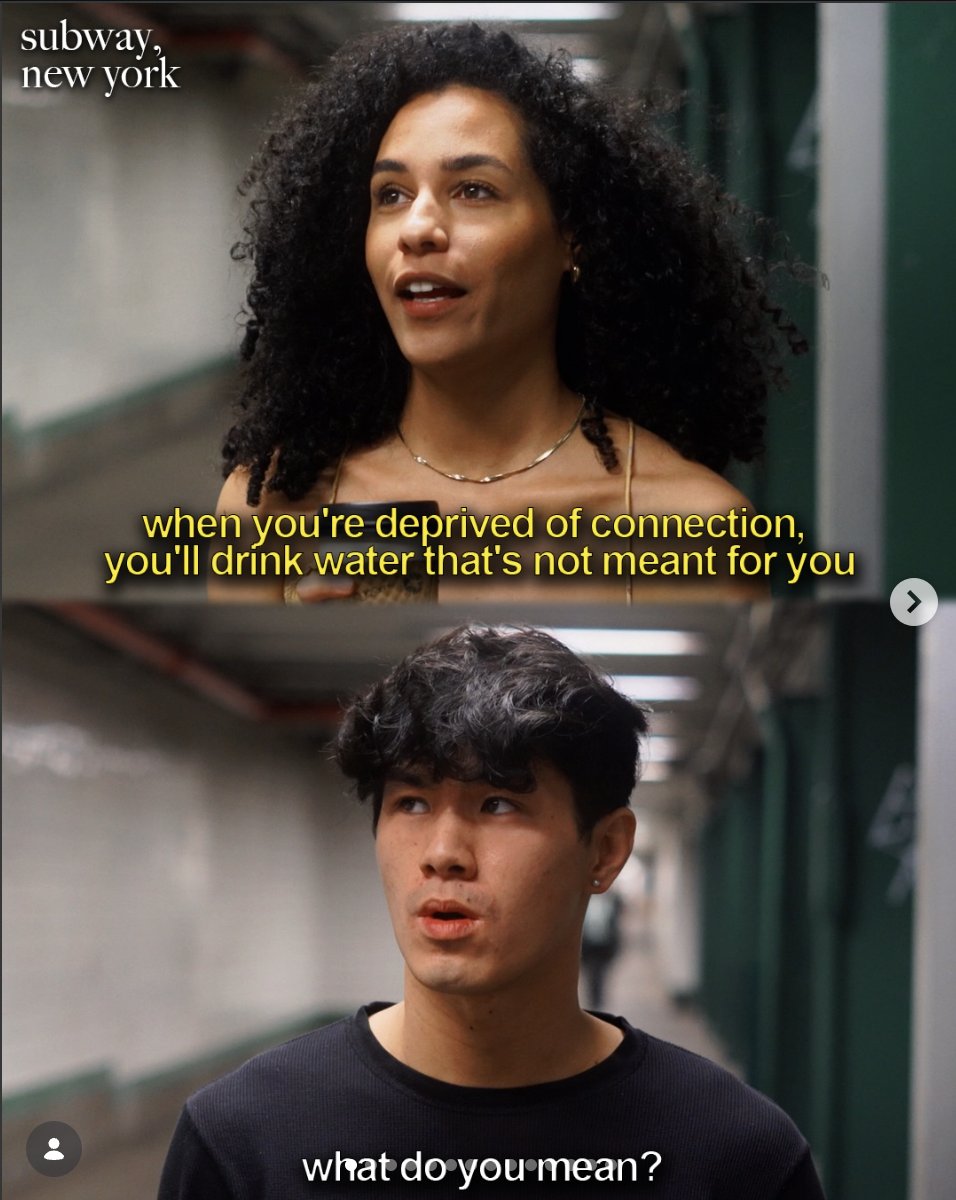
That line — when you’re deprived of connection, you’ll drink water that’s not meant for you — explains everything about how I got here. I was showing up at depth. I was extending the kind of connection I wanted to receive. And I was meeting someone who knew how to reflect it back just long enough.
You’ll mistake someone’s availability for their capacity. You’ll pour into cups that can’t hold what you’re offering and call the spillage your fault.
I did this for four years.
The Five Stages
There are stages to these relationships. Not the grief stages. Different ones. If you’ve been in one of these you’ll recognize them.
| Stage | What it felt like | When |
|---|---|---|
| The honeymoon | Magic. Everything, all the time. | July 2022 – January 2023 |
| The drift | More good than bad. Probably fine. | January 2023 – February 2025 |
| The turn | The performance ends. He won. | February 2025 onward |
| The free fall | Europe. Mask off. Not going back on. | September – October 2025 |
| The hook or the exit | The job. The return. The decision. | October 2025 onward |
Stage one is magic. He cooked for me every day. Came home to a hot meal, real effort, real thought. He made me feel like the most important person in the room, which when you’re newly arrived in a foreign country and building a life from scratch hits differently than it would have otherwise.
We did everything together. Movie nights. Romantic dinners. Long days where the whole point was just being near each other. He moved in on the third date, which I let happen faster than I should have, but in that first period it felt right. July into August 2022.
Somewhere in those six months I convinced him to quit his job. He was being mistreated where he worked. I hated watching it. And the math felt simple at the time: he was uniquely positioned to manage the house. We were mid-renovation, mid-remodel, everything in Spanish, all the contractor relationships and municipal paperwork and supply runs and decisions that come with a full property overhaul. He had the language, the local knowledge, the connections I didn’t have.
So I offered him a deal. I’d pay him the same salary to stay home and run the estate instead. I also kept a housekeeper, specifically so he’d never feel like “the help.” The house would be the job. He would be the manager.
He was. For a while. Though anything requiring a real decision or actual problem-solving still landed back on my desk, regardless of how the arrangement was structured. I noticed this and filed it somewhere I didn’t look at very often.
In January 2023 I proposed. Big birthday party for him, full room, the whole moment. He said yes. And something shifted.
Stage two is the drift. After the proposal the warmth became intermittent. Not gone. Just conditional in a way it hadn’t been before. More good than bad, which is exactly the ratio that keeps you in something too long. This phase ran about two years.
We got married February 15, 2025.
Stage three is the turn. He’d won. That’s the framework, not mine, but I understand it now. The performance during courtship had served its purpose and winning meant he no longer had to try. Almost immediately after the wedding the consistency stopped.
He stopped cooking. Stopped managing the house that was supposed to be his job. His contribution narrowed to the cat boxes, the laundry, and occasionally making his own breakfast. I was working full days and then cooking dinner. The renovation oversight that had been the whole rationale for the arrangement was back on me by default.
We stopped doing things together. He was in the bedroom on his phone. I was everywhere else. We had become roommates with occasional warmth. A touch. A hug. Intermittent intimacy. Just enough, timed just right, to keep the possibility alive. I don’t think this was calculated. I think it was instinctive. The maintenance dose.
Before Europe I told him he needed to get a job when we got back.
Stage four is the free fall. Extended travel is the fastest diagnostic I know for a relationship. Routine runs out. You’re in close quarters in unfamiliar places and every version of yourself shows up eventually.
The mask came off on day three. If he had been anyone other than my husband, financially dependent on me, I would have pulled over somewhere in Spain and told him to find his own way home. The math stopped me: I’d still have been on the hook financially, ending things publicly in Europe might have meant coming home to a trashed house, and there was still something in the back of my mind insisting I was misreading it.
All of it was the correct read. The mask was off and it wasn’t going back on.
He insulted me. Tried to make me feel stupid. Tried to tell me how to drive in countries with functioning roads and actual speed limits, which was interesting since he doesn’t hold a driver’s license in Mexico and had never left Latin America before this trip. My comfort in those environments threatened him. My competence read as a provocation.
This is a pattern I’ve seen more than once, not just with him. People who become resentful of me for not needing them. Capability as a threat. Ease in the world as an affront. I’m not claiming to be remarkable. I’m saying that for a certain type of person, watching someone else move comfortably through a space where they feel small is intolerable.
Being raised by a narcissist, and then spending years with one, trains you specifically not to trust this read. The gaslighting works on the gut first. You learn to override your own instincts because your instincts have been treated as evidence of your irrationality so many times that you stop trusting them.
Trust your gut. Even when it’s been trained out of you. Especially then.
Stage five is the hook or the exit. We came back from Europe in October 2025. I held him to the job requirement. He had every excuse available. He was too old (at 42). Couldn’t find anything. Nothing was right. The market, the timing, the circumstances. Eventually I had to reach into my own network in the States and get him connected directly, because left to his own momentum nothing was going to happen.
Just when you’ve had enough, they bring back stage one. Not fully. Not for long. Long enough. It’s the most effective trap ever designed and it doesn’t require conscious intent to work perfectly.
Eventually you either get out or you cycle through again.
I asked him to move out. At this point in my life, at 37, it was the hardest thing I’ve ever done. The biggest. Most consequential. Also with a ton of grief and second-guessing. I cried more then than I did when I lost my Dad. But my therapist, my business coach, and my inner circle all encouraged me to go through with it.
3 months later looking back, it was very much the right decision.
The Therapy Chapter
We tried it twice. Worth saying how both went.
The first time was somewhere between the proposal and the unraveling. Something felt off enough that I suggested it, and he agreed. My therapist gave us both a personality assessment — a ranked list of 25 strengths and weaknesses, your top to your bottom.
My top three were mostly his bottom three. His top three were mostly mine.
There was some overlap in the middle, which is probably what kept us going as long as we did. But the core of who I am and the core of who he is were pulling in opposite directions. I think my therapist was trying to show me something without saying it directly. He probably didn’t have a clear read on the narcissism yet. And honestly, even if he’d said it plainly, I probably wouldn’t have listened.
The second time was after Europe. By then I knew something was seriously wrong and I thought maybe professional structure would help.
What actually happened: he came as moral support. For me. Because I was 100% of the problem, and he was there to support me through working on myself. Not to participate. Not to look at anything on his end. Just to sit there while I did the work, which was generous of him since there wasn’t anything for him to examine anyway.
I gave it two sessions. When it became clear the arrangement was what it was, I continued on my own without him.
That’s the therapy chapter. It ended with me in a chair working through my own patterns and him at home with his.
The solo work is the part that actually helped. But I want to say one more thing about why he was never going to do that version himself.
Two reasons, and both are real.
The first is cultural. In Mexico, mental health isn’t a concept that applies to ordinary people with ordinary problems. The threshold for acknowledging someone needs help is roughly: are they visibly in crisis? If yes, the response is to involve family, occasionally with prayer, more often with kidnapping and involuntary commitment to a poorly equipped place that acts more as a glorified prison than mental health support.
For everything below that threshold, you suck it up or you don’t talk about it at all. A man going to therapy for relationship patterns would be, in most of the social circles I’ve encountered here, somewhere between embarrassing and incomprehensible.
The second is financial. A therapist in Ensenada charges around 500 MXN per hour. The daily minimum wage in Baja California is roughly 440 MXN. He was earning more than minimum wage, but not so much more that a weekly session wasn’t a real chunk of a day’s pay, indefinitely. For most working-class Mexicans, mental healthcare is simply not accessible. Not because they don’t need it. Because the math doesn’t work.
I’m not saying this to rehabilitate him. I’m saying it because the patterns that damage us don’t always come from malice. Sometimes they come from a person who never had the tools to see themselves clearly. That doesn’t make the damage less real. It just means the story is more complicated than villain and victim.
I got therapy. He didn’t. That’s part of why I’m writing this and he’s updating his Instagram bio.
The Education
I asked him to move out. Then I sat in my house, which was very quiet, and I read.
Dr. Ramani Durvasula’s Should I Stay or Should I Go1 was one of the most important things I encountered during that period. Painful in the way that accurate things are painful when you’re not ready for them. Validating in the way that finally having a name for something is validating. I’d been living with a description I couldn’t read for four years. That book handed me the translation.
One thing my therapist told me later has stuck with me: almost all clinical research on narcissistic personality disorder is institutional. Prison populations. Inpatient psychiatric settings. People who got there because the disorder hit some criminal or crisis threshold. We have almost no research on the garden variety ones, the ones who hold jobs and maintain marriages and run errands and charm everyone at the party and quietly make someone else’s life very small.
My ex isn’t a monster. He’s a person with a disorder that went unexamined and unaddressed his entire life, probably because there was always someone around willing to absorb the cost. That someone was me, for four years.
Everyone who has been in a relationship like this should read Dr. Ramani. Not to weaponize the vocabulary, but to stop carrying the weight of something that was never yours to carry.
A Type I Didn’t Know Existed
After the marriage ended I started doing what you do. I read. I watched. I went to therapy. I learned the categories.
Dr. Ramani identifies five types. Classic grandiose. The covert. The malignant. The seductive. And the one I hadn’t encountered in the literature until I looked for it: the communal narcissist.
The communal narcissist gets supply through being witnessed as the most virtuous, giving, loving person in the room. The charity work is real. The outcomes are real. The engine running it is not virtue. It’s the need for public validation, and when that image gets challenged, the warmth evaporates fast.
I moved to Baja and I know at least three of them.
Let me be precise about something, because this matters: the good they do is real. The people they help are genuinely helped. I’m not dismissing any of that and I’m not suggesting anyone stop supporting the work they do. If you give to an organization and the money builds houses or feeds people or provides care, that result is real regardless of the psychology behind it.
What I’m describing is the engine, not the outcome.
A few months ago I was involved in a small drama that in retrospect was completely predictable. Charity footage appeared online showing elderly people receiving aid. They looked uncomfortable. One segment showed someone being handed packages of adult diapers on camera. My reaction was strong. I said something about it publicly, which was a tactical mistake regardless of whether the underlying concern was valid. Public is callout territory. Private would have been smarter.
What happened next was instructive. Two people whose public identity was built entirely on their visible generosity reacted as though I had threatened their safety. Which, in a way, I had. Not their physical safety. Their supply.
This is what happens when you challenge a communal narcissist’s self-image. The cause becomes the cover story. The kindness is real until it’s questioned. The moment you introduce friction you find out very fast that the warmth was always conditional.
I have zero doubt that both of these people believe themselves to be exactly what they present. That’s part of what makes the communal type so difficult to see clearly, in others and in yourself. The story they tell is a story they’ve told so long they’ve become it.
But when a simple disagreement about the ethics of filming vulnerable people produces a sustained effort to damage your standing in a small community, you’re not dealing with someone who has a healthy relationship to criticism. You’re dealing with someone for whom the image is the whole thing.
I live in a small town. These people are widely loved. I need to coexist with them. What I don’t need to do is pretend not to see what I’m looking at.
The Pattern in Me
This is the part that’s harder to write.
The list of narcissists isn’t the point. The point is what they have in common, which is me. A specific frequency I grew up with, learned to read as love, and kept selecting for across fifteen years and multiple contexts.
My dad, my ex-husband, the two in my late twenties, the ones in my community now. Not all romantic. Not all the same type. But the same basic architecture. Someone who needs to be the most important thing in the room. Someone for whom other people’s needs are inconvenient. Someone who, when you stop performing the role they need, stops seeing you.
I keep showing up at depth in relationships that are operating at the surface. I keep extending the kind of connection I want to receive from people who haven’t developed the capacity for it and haven’t asked to. Then I feel the gap as rejection or personal failure.
This is worth understanding. I’m going to keep writing about it here.
This series is going to go to some uncomfortable places. Some of them have already happened and I’m still sitting with them. Some of them I’m still in.
The goal, to be clear, is not catharsis. I have a therapist for that. The goal is that pattern recognition is transferable, the expensive lessons are shareable, and you might save yourself something by reading about what it cost me.
You probably won’t. People rarely do, with this particular thing.
But the post exists now and so does the invitation.
-
Durvasula, R. (2015). Should I Stay or Should I Go: Surviving a Relationship with a Narcissist. Post Hill Press. Affiliate link — I earn a small commission at no extra cost to you. ↩
More like this

The Saddest Bar in the World, and We're Still Missing It
A meme in a 90s nostalgia group mourned the loss of $1 McChickens and 24-hour Walmarts. I read it. I nodded. Then I caught myself. That's...
Finding Common Ground: The Beatitudes Reimagined for a Divided World
Bishop Mariann Edgar Budde’s heartfelt plea for compassion reminds us of the timeless wisdom in the Beatitudes. In a divided world, her w...
Being Content With Less: From Excess to the Things That Matter
I've been making changes everyday in order to be happy with less. I've redefined what success is, what makes me happy, what I want to do ...
Comments
Comments are powered by Disqus, which sets third-party cookies. Click above to load.