Cochinita Pibil-Style Slow Pork
Cochinita pibil comes from the Yucatán, where the traditional version is buried in a pit (pib) lined with stones and banana leaves and cooked overnight. This is not that. This is the home-kitchen version that gets you about 90% of the way there with a Dutch oven and a Sunday afternoon.
The achiote paste is what makes it cochinita and not just pork. It’s a brick-red blend of annatto seed, oregano, cumin, garlic, and bitter orange that stains everything it touches and has zero substitute. Buy a tub of the El Yucateco brand if you can find it — it lasts forever in the fridge and you only use a few tablespoons at a time.
The other Yucatecan ingredient is the bitter orange. Most US supermarkets don’t carry it, so I cheat with two parts fresh OJ to two parts lime juice. The lime alone is too acidic; the OJ rounds it out. It’s not perfect, but it’s right.
Banana leaves are worth tracking down. They infuse a faint vegetal sweetness that you don’t get from foil — and they make the pot look like you know what you’re doing when you bring it to the table. If you can’t find them, foil works fine. The pork will still be very, very good.
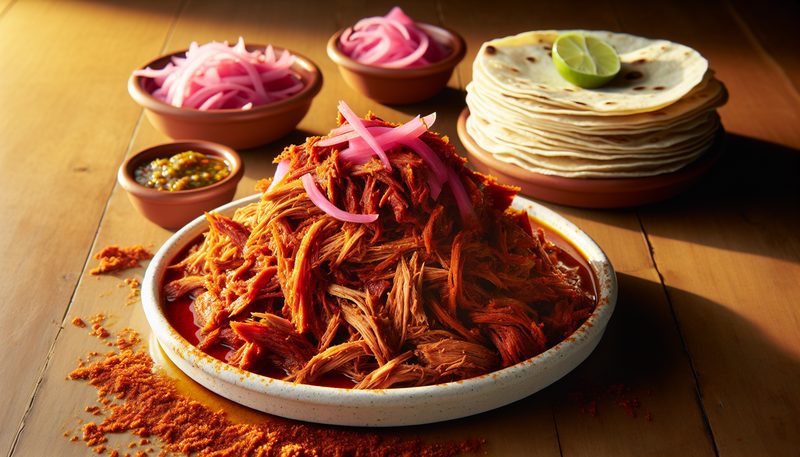
Serve it on warm corn tortillas with pickled red onion (red onion + lime juice + salt, sit 30 minutes) and the hottest habanero salsa you can stand. This makes leftovers for tacos all week.
Cochinita Pibil-Style Slow Pork
Ingredients
Instructions
- Blend achiote paste, citrus juices, garlic, cumin, oregano, and salt into a smooth marinade.
- Coat pork chunks thoroughly. Cover and marinate at least 2 hours, overnight if you can.
- If using banana leaves, char them briefly over a gas flame or dry skillet until pliable. Line a Dutch oven with them.
- Nestle the pork in. Cover tightly and cook at 325°F for 3 hours, or in a slow cooker on low for 8 hours, until pull-apart tender.
- Shred the pork with two forks. Taste and adjust salt.
- Serve on warm tortillas with pickled red onion, habanero salsa, and more lime.