
What Everyone Thought


When you tell people you’re uprooting your life to move to Mexico for a guy you’ve known for three dates, the reactions sort themselves pretty fast.
There’s the supportive camp. The skeptical camp. And then the third kind, which is harder to clock in the moment. That’s the people who have real thoughts and decide not to share them with you. You find out about those later. Usually the hard way.
My Mom
My mom had reservations. She didn’t hide them, exactly. But she held them with both hands and offered them up carefully, the way you do when you know the person you love is not going to listen.
She worried about how fast we were moving. She thought he might be using me. The green card concern. The American-with-money concern. The all of it concern. I told her she was wrong. I told her I could tell the difference. I told her he wasn’t like that.
She let me proceed. Because I was an adult and she would love me either way.
Then she came to visit.
And then she came back. And kept coming back.
What won her over wasn’t a trip or a grand gesture. It was just him, in the day-to-day. He was warm with her in a way that was easy and genuine, the way some people just are. He made her breakfast. He sat with her at lunch. He took her around the city. He showed up at community things. He made her feel at home in a country that wasn’t hers.
She loved him. Genuinely. More than some of her actual family. He prioritized us over his own, which in retrospect says something about how much warmth we showed him compared to what he’d gotten at home. At the time I thought that was sweet. Now I understand it differently.
The Moms
Here’s a thread that doesn’t get talked about enough in stories about divorce: the friendships that end that weren’t yours.
His mom and my mom couldn’t speak each other’s language. Not really. My mom doesn’t speak Spanish. His mom doesn’t speak English. They communicated through Felipe, through me, through whatever universal language two women figure out when they’ve decided they like each other and aren’t going to let a small thing like words get in the way.
They built something real anyway.
For Felipe’s mom, these trips were a first. She had never been on a vacation before we came into her life. Never left for the weekend somewhere just to enjoy herself, eat good food, sit at a pool, not work. That’s not a judgment on anyone — it’s just the reality of her life up to that point. We changed that.
Puerto Vallarta became a regular thing. We went multiple times, the four of us or some version of that group. Mazatlán. San Felipe for Thanksgiving, which became its own tradition. We drove down to his hometown in Baja California Sur to meet his extended family. Mexico City twice — once as a family trip, once with friends. Each trip, his mom would pack carefully and show up at the car with that particular energy of someone who still can’t quite believe they get to go somewhere.
My mom would be waiting.
That friendship is over now. When the marriage ended, so did this. My mom doesn’t talk to his mom anymore. She can’t. There’s no bridge left that doesn’t go through a marriage that no longer exists.
That’s one of the quieter losses of the whole thing. Two women who figured out how to be friends across a language barrier, across a border, across every reason it shouldn’t have worked — and the thing that ended it had nothing to do with either of them.
Neither mom fully deserved that part.
The Friends Who Knew
Some of my Mexican friends and acquaintances had more specific reservations. They knew the cultural context I didn’t have yet.
There’s a word, vivador. It translates roughly as freeloader, but that sells it short. It describes someone who makes a lifestyle out of attaching themselves to people with resources, moving through the world on other people’s effort and generosity without any real intention to change that. It’s a known type, especially in certain communities. I didn’t know this word when I met him. Several people who knew or knew of him knew it very well.
They didn’t tell me.
I understand why. It’s hard to say that to someone who’s glowing. Also, I probably would have argued.
Linda
Linda had her own experience with a failed marriage, one where I had given her some fairly direct tough love at the time. So when it was my turn, she held back. She was supportive in the ways that mattered. She had her thoughts. She kept most of them.
I’ve never held that against her. It’s hard to volunteer something someone isn’t ready to hear.
Everybody Else
The wider group was genuinely happy for me. They said I looked different. That I was glowing. I was. He was. We both were, the way you are in the first year of something you’ve never felt before.
I had always been told that when you meet the right person you just know. In my mid-thirties I finally understood what that meant. I felt it in my chest.
The Party House
Here’s something nobody tells you about buying a place in Mexico two hours from San Diego: you will see more of your San Diego friends than you ever did when you all lived in the same city.
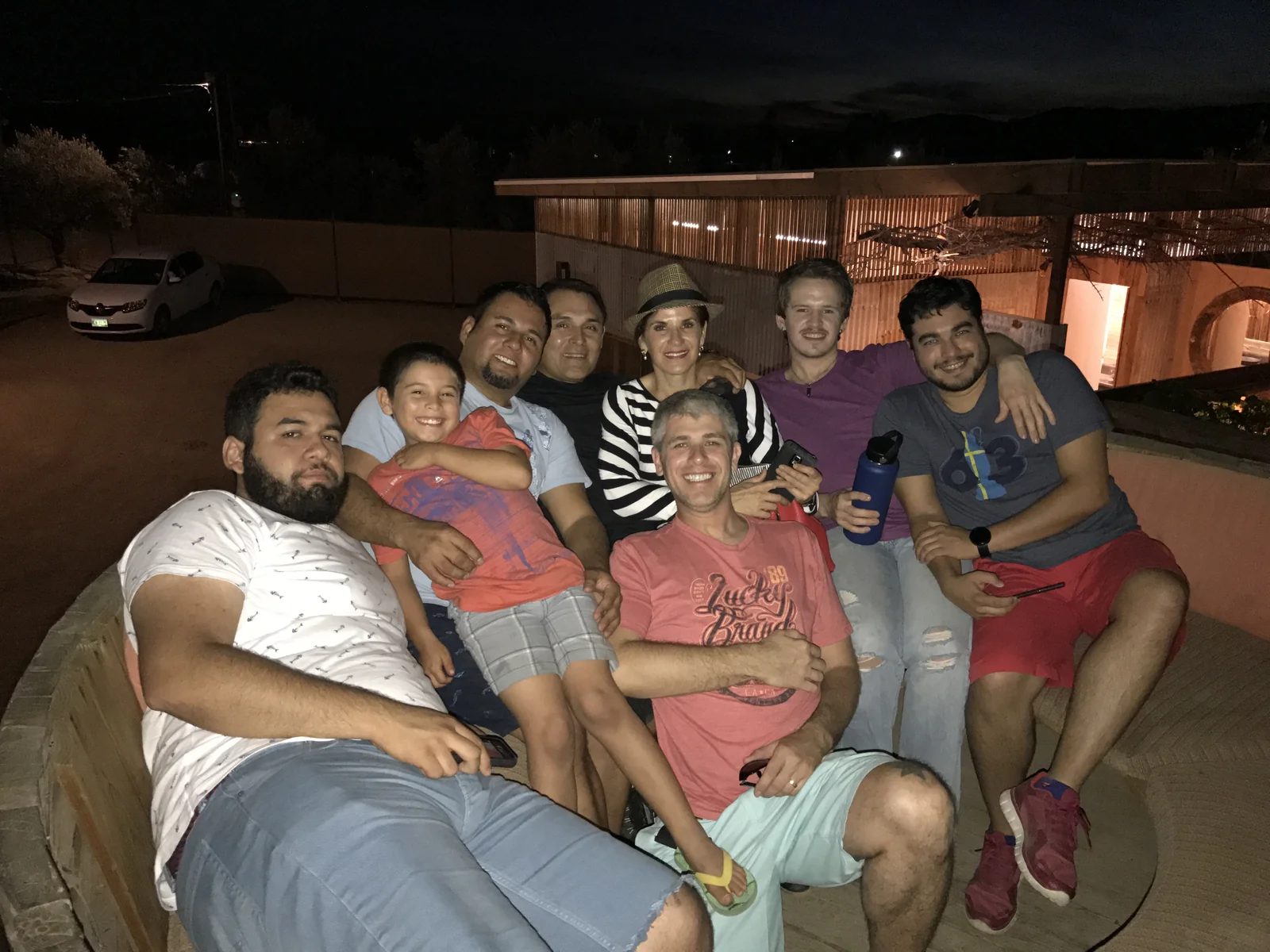
We became the getaway. People came down on long weekends, on random three-day holes in their calendars, on any excuse they could manufacture. We threw parties. We hosted dinners. The terrace was almost always full of someone.
I meant what I wrote in Part 1 about seeing people more in Ensenada than I ever did in San Diego. It’s true and it remains one of my better memories from that chapter.
But being the party house gets old. Eventually you realize there’s a proverb about never lacking for friends when you’re the one supplying the venue, the food, and the wine. To be fair, my people mostly contributed, mostly paid their way. But the hospitality still falls on you. It’s work.
We kept doing it anyway. The early days called for it. We were happy. Everyone could see it.
I wasn’t listening to the warnings. I was too busy being the couple everyone was coming to see.
Comments
Comments are powered by Disqus, which sets third-party cookies. Click above to load.